A2A Protocol: The Future of Seamless Digital Communication
In the rapidly evolving landscape of digital interactions, seamless and secure communication between applications is more critical than ever. One emerging standard that’s gaining traction across industries is the A2A Protocol – short for App-to-App Communication Protocol. Whether in fintech, healthcare, government tech, or e-commerce, A2A is transforming the way apps talk to each other, enabling smoother, faster, and more secure digital experiences.
What is the A2A Protocol?
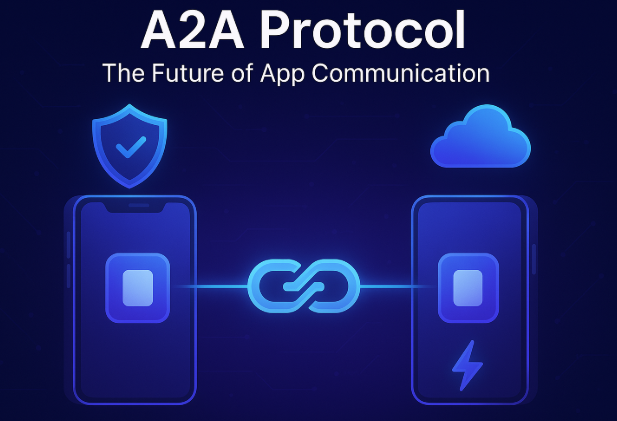
The A2A (App-to-App) Protocol is a standardized method of allowing two applications to interact directly on a user's device without relying on intermediate web pages or external redirections. It ensures the transfer of data or user commands happens within the native apps themselves, providing a more controlled, secure, and efficient communication pipeline.
Traditionally, inter-app communication often involved redirection to web browsers or using APIs via third-party services. A2A eliminates these layers, allowing apps to launch each other directly using deep linking, intent-based routing, or custom URI schemes. This ensures transactions, authentications, or data sharing flows remain uninterrupted and native.
In India, A2A is most prominently implemented in the Unified Payments Interface (UPI) system, which facilitates real-time, inter-app financial transactions. Here, one app initiates a payment, and another handles the authorization process, all within the user’s mobile ecosystem.
Why is the A2A Protocol Important?
Modern users demand fast, frictionless experiences, especially in mobile applications. Traditional web-based redirects or third-party browser flows disrupt the user journey and often cause transaction failures or abandoned actions. The A2A Protocol solves this by enabling:
- Highly secure app-to-app communication using modern encryption and token-based validation.
- Minimal interruption to user workflows, improving overall satisfaction and completion rates.
- Faster transaction and authentication cycles due to direct app invocation.
- Native and contextual experiences that feel more professional and cohesive.
Key Features of A2A Protocol
- Seamless Navigation: Completely bypasses web-based redirects, enabling smooth transitions between apps.
- Security-First Design: Built with end-to-end encryption, secure channels, and robust app authentication protocols.
- Minimal Overhead: Lightweight architecture reduces resource consumption and speeds up performance.
- Better Performance and Lower Latency: Optimized for mobile environments, ensuring rapid app launch and response.
- Customizable Flows: Developers can build complex multi-app interactions tailored to specific business needs.
Advantages of A2A Protocol
- Enhanced User Experience
- Provides an intuitive and natural app journey without confusing transitions.
- Speed and Efficiency
- Reduces the time taken for completing tasks like payments, logins, or document sharing.
- Improved Security
- Avoids insecure browser redirects, keeping data confined within encrypted app environments.
- Greater App Interoperability
- Works across a wide range of apps that implement the same standards, increasing ecosystem compatibility.
- Reduces Drop-off Rates
- Especially valuable in checkout flows, where reduced friction leads to higher conversion rates.
- Offline Invocation Capabilities
- Some A2A implementations support offline invocation, which can later sync with servers once connectivity is restored.
Disadvantages of A2A Protocol
- Implementation Complexity
- Requires tight collaboration between app teams to define, test, and manage protocols.
- Limited Desktop Support
- Primarily designed for mobile applications; desktop or web platforms cannot fully leverage its capabilities.
- Lack of Universal Standards
- No global governing body currently enforces a unified A2A protocol, leading to inconsistencies.
- Platform-Specific Limitations
- Android and iOS handle app intents and deep links differently, increasing development and testing overhead.
- Security Maintenance Overhead
- As apps are tightly integrated, any change in one app's structure may require updates in the partner app.
Real-World Examples
1. Unified Payments Interface (UPI) in India
Perhaps the most widespread example of A2A in action is the UPI framework:
- A user shops on an e-commerce app and selects "Pay via UPI."
- The app uses A2A to open the user’s preferred UPI app (e.g., PhonePe, GPay, Paytm).
- After biometric or PIN authentication, the payment completes.
- Control returns to the shopping app with transaction status.
This method avoids browser redirects and provides an uninterrupted flow.
2. Healthcare App Integration
Consider a scenario where a health-tracking app retrieves vaccination data from a government health record app:
- The user grants permission once.
- The A2A protocol facilitates this data exchange without repeated logins or web redirects.
- All interactions remain secure, authenticated, and within native apps.
3. Banking and KYC Verifications
Modern banking apps often require document submission or identity verification. A2A allows banks to call government-verified identity apps directly:
- The user verifies their Aadhaar or PAN via an official app.
- Data is transferred instantly and securely back to the bank’s app for onboarding or verification.
4. Loyalty Programs and Shopping Apps
Retailers can link shopping apps to loyalty apps using A2A:
- A user buys a product in one app.
- It opens a loyalty rewards app to apply discounts or redeem points.
- The control returns to the original app to complete checkout.
Effects and Impact
- Fintech Transformation: A2A has unlocked the potential of real-time payments and digital wallets.
- Increased Security and Trust: Sensitive data never leaves the app ecosystem, reducing exposure to threats.
- Boost in Digital Ecosystem Growth: A2A encourages app developers to build more connected services.
- Enhanced Productivity: Users can accomplish more within apps without needing to switch contexts.
- Lower Abandonment Rates: Particularly impactful in e-commerce and fintech, where frictionless flows result in higher retention and conversion.
- Encourages Innovation: Developers can craft new types of microservices and apps built around multi-app workflows.
Conclusion
The A2A Protocol marks a significant evolution in how apps communicate. It addresses longstanding pain points related to user experience, security, and efficiency. As more organizations recognize the value of direct app-to-app interactions, we can expect A2A to become a core element of mobile-first digital strategies.
For businesses, it’s a tool for driving growth and engagement. For developers, it presents a new frontier of innovation. And for users, it’s the key to faster, smoother, and safer digital experiences.
Whether you're building the next big fintech platform or enhancing your healthcare app, embracing A2A could give your product the edge it needs in a competitive digital market.